Material compatibility reference
Foam Fabrication Compatibility
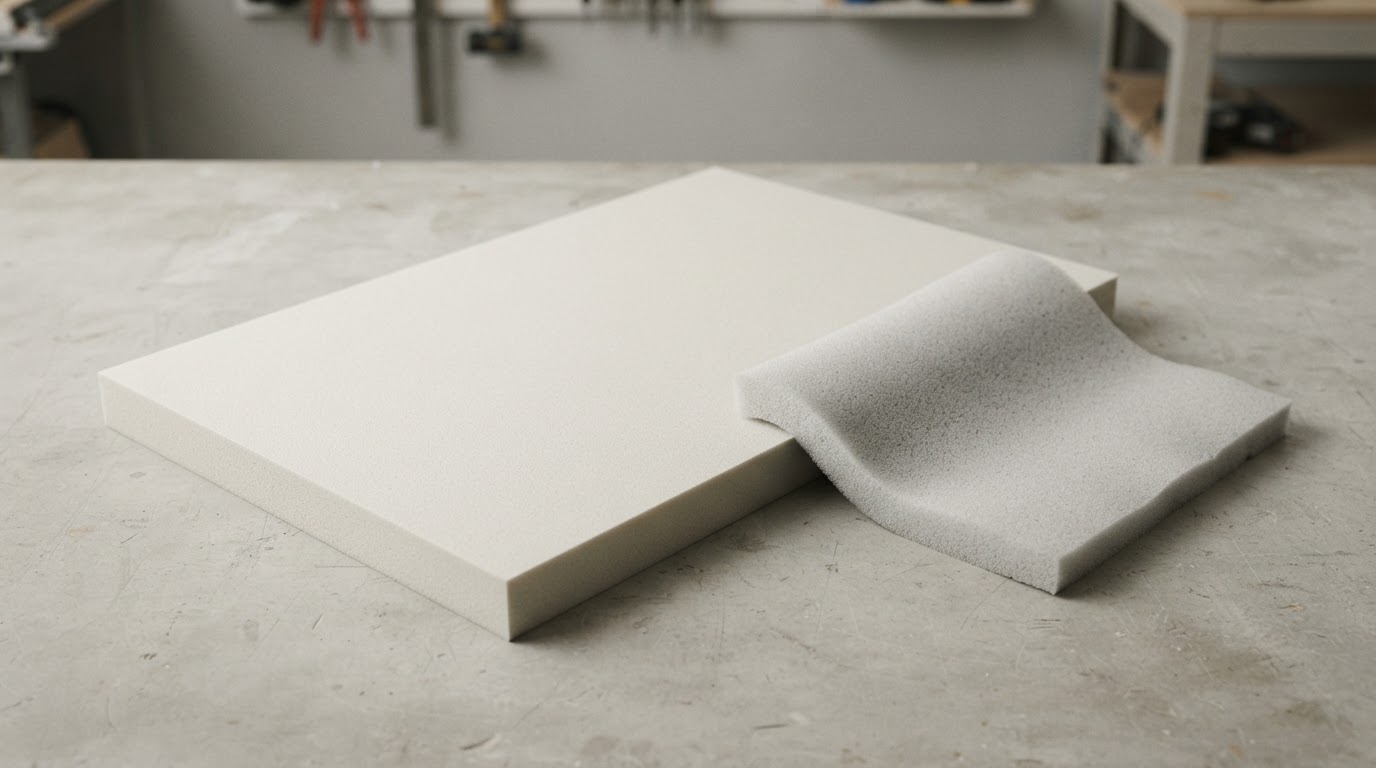
Foam describes a physical structure — a material full of gas pockets — not one chemistry. Fabrication foams can be very different polymers (EVA, polyethylene, polyurethane, polystyrene, PVC-containing foams), and their compatibility and safety vary enormously. Identify the actual foam material before any laser processing; some foams release corrosive or toxic fumes when heated.
Quick compatibility overview
How each digital fabrication technology relates to foam at a glance. See the sections below for detail.
- Diode LaserConditional — Works, but depends heavily on machine, settings, or material specifics.
- CO2 LaserConditional — Works, but depends heavily on machine, settings, or material specifics.
- Fiber LaserNot applicable — Not a meaningful combination for this material and technology.
- CNC RouterConditional — Works, but depends heavily on machine, settings, or material specifics.
- FDM 3D PrintingNot applicable — Not a meaningful combination for this material and technology.
- Resin 3D PrintingNot applicable — Not a meaningful combination for this material and technology.
Compatibility by technology
What each process can do with foam, important limitations, and safety considerations.
Diode Laser
Conditional — Works, but depends heavily on machine, settings, or material specifics.Some foams can be cut or engraved with a diode laser, but compatibility depends entirely on the actual polymer. Foams containing PVC or other chlorinated polymers must not be laser-processed — they release corrosive hydrogen chloride gas. Never laser an unidentified foam.
Operations
- Cutting
- Engraving
Suited to
- Cutting or engraving a foam only after its composition is confirmed laser-safe
Limitations
- Compatibility depends on the actual polymer — 'foam' alone is not enough information
- PVC-containing foams (e.g. some foam board) release corrosive hydrogen chloride — never laser them
- Foam can melt, ignite, or produce toxic fumes — composition must be identified first
Safety considerations
- Never laser-process PVC or chlorinated foam — it releases hydrogen chloride and other corrosive fumes. Ventilation does not make it safe.
- Identify the foam composition (check the SDS/manufacturer data) before any laser processing.
Compatibility of Diode Laser with Foam.
CO2 Laser
Conditional — Works, but depends heavily on machine, settings, or material specifics.CO2 lasers can cut some foams cleanly, but the same composition warning applies. PVC-containing foams and other chlorinated foams must never be laser-processed. Many rigid foams cut well, but unknown or coated foams can melt, ignite, or release hazardous fumes.
Operations
- Cutting
- Engraving
Suited to
- Clean cutting of confirmed laser-safe rigid foams
- Engraving compatible foam materials
Limitations
- PVC/chlorinated foams release corrosive hydrogen chloride — never laser them
- Unknown or coated foams can melt, ignite, or emit hazardous fumes
- Foam density and chemistry determine whether cutting is clean or dangerous
Safety considerations
- Never laser PVC or chlorinated foam — corrosive fumes harm operators and damage optics and equipment.
- Confirm the foam is a laser-safe polymer before processing; do not assume all foam is safe.
Compatibility of CO2 Laser with Foam.
Fiber Laser
Not applicable — Not a meaningful combination for this material and technology.Fiber lasers are designed for metal marking and are not a practical tool for foam. The wavelength and power profile are not suited to polymer foam cutting or engraving.
Suited to
Limitations
- Fiber lasers are not a foam processing tool
- Using the wrong laser type on foam risks melting or igniting the material
Compatibility of Fiber Laser with Foam.
CNC Router
Conditional — Works, but depends heavily on machine, settings, or material specifics.Many rigid foams machine well on a CNC router — profiling, pocketing, and shaping are common. Soft, flexible foam is harder to hold and cut cleanly. Suitability depends on foam density and rigidity, and chip/dust management matters.
Operations
- Machining
Suited to
- Profiling and shaping rigid foam stock
- Pockets and forms in dense, machinable foam
Limitations
- Soft flexible foam is difficult to hold and cut cleanly
- Density and rigidity determine whether machining is clean or tears the material
- Foam dust and debris require management
Safety considerations
- Some foam dust is a respiratory or ignition hazard — use dust collection and confirm the foam composition.
Compatibility of CNC Router with Foam.
FDM 3D Printing
Not applicable — Not a meaningful combination for this material and technology.FDM printers do not print conventional foam stock. Specialty foaming filaments exist, but they are a composite printing material that produces a foam-like part — not equivalent to machining foam stock.
Suited to
Limitations
- FDM does not process foam stock
- Foaming filament is a composite, not conventional foam
Compatibility of FDM 3D Printing with Foam.
Resin 3D Printing
Not applicable — Not a meaningful combination for this material and technology.Resin printers cure photopolymer and do not produce conventional foam. Specialty foaming resins are not equivalent to foam stock.
Suited to
Limitations
- Resin printing does not produce foam parts
Compatibility of Resin 3D Printing with Foam.
Material safety notes
- Foam is a structure, not a chemistry — identify the actual polymer before any processing, especially laser work.
- Never laser-process PVC or chlorinated foam: it releases corrosive hydrogen chloride that harms operators and damages equipment. Ventilation does not make it safe.
- Foam can ignite easily — treat any laser as an ignition source and never run unattended.
Notes & context
- 'Foam' is the clearest example in this database of why material identification matters more than the category name — compatibility depends on the actual polymer, not the fact that it is foam.
- A composite containing foam (foaming filament/resin) is not the same as fabricating conventional foam stock.
Related guides
Sources & further reading
Selected references used to establish the compatibility guidance above. Always confirm against current manufacturer and material documentation before processing.
- Laser Cutter Safety Guidance — MIT EHSProhibits PVC and chlorinated thermoplastics (hydrogen chloride, optic corrosion); use SDS Section 10 to evaluate unknown materials.
- Which Materials Are Not Suitable for Laser Cutting and Engraving? — Thunder Laser USAPVC releases hydrogen chloride forming hydrochloric acid inside the machine; no safe way to laser PVC.