Material compatibility reference
Glass Fabrication Compatibility
A hard, brittle, transparent material made from silica. Glass is a workpiece material, not a fabrication feedstock — it can be surface-engraved by the right laser and machined only with specialized equipment, but ordinary digital fabrication tools do not cut solid glass. Engraving glass is very different from cutting it.
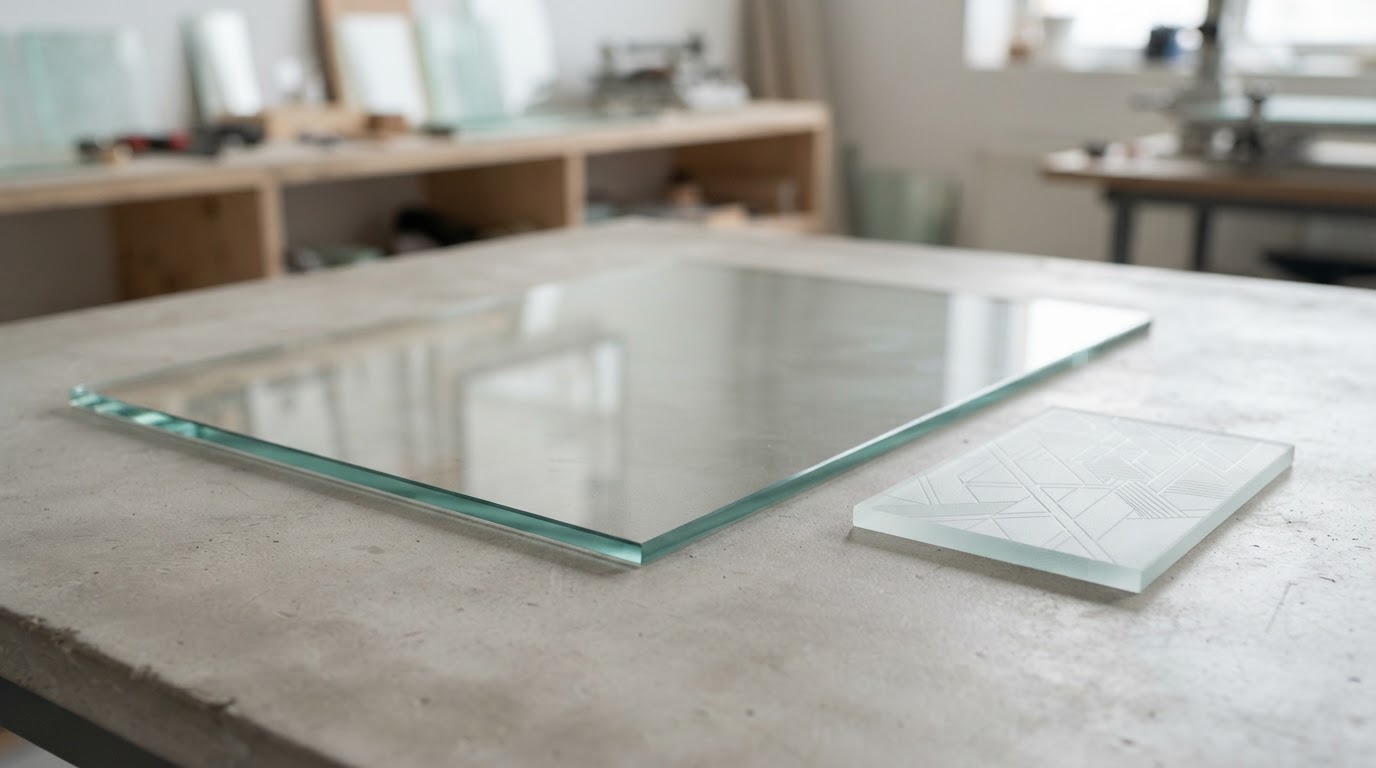
Quick compatibility overview
How each digital fabrication technology relates to glass at a glance. See the sections below for detail.
- Diode LaserLimited — Possible but with significant constraints; often not the best choice.
- CO2 LaserGood — A capable match with normal considerations.
- Fiber LaserNot applicable — Not a meaningful combination for this material and technology.
- CNC RouterNot recommended — Technically possible in some cases but generally a poor or unsafe choice.
- FDM 3D PrintingNot applicable — Not a meaningful combination for this material and technology.
- Resin 3D PrintingNot applicable — Not a meaningful combination for this material and technology.
Compatibility by technology
What each process can do with glass, important limitations, and safety considerations.
Diode Laser
Limited — Possible but with significant constraints; often not the best choice.Typical blue diode lasers largely pass through transparent glass without interacting with it. Some diode setups can mark glass with surface treatments, coatings, or a dark backing, but bare clear glass is not directly engraved by a standard diode.
Operations
- Marking
Suited to
- Marking glass with surface treatments or coatings that absorb the diode wavelength
Limitations
- Blue diode wavelengths pass through clear glass rather than engraving it directly
- Direct engraving of bare glass generally requires a CO2 or UV laser, not a diode
- Results depend on coatings or prep techniques, not the glass itself
Safety considerations
- Never assume a coated or tinted glass is safe to laser-process — confirm the coating composition first.
Compatibility of Diode Laser with Glass.
CO2 Laser
Good — A capable match with normal considerations.CO2 lasers are the laser technology most relevant to glass: their 10.6-micron wavelength is absorbed by the glass surface, producing a frosted engraved mark. This is surface engraving only — a CO2 laser does not cut through solid glass.
Operations
- Engraving
Suited to
- Surface engraving glass for awards, signs, and decoration
- Frosted white engraved marks on glass surfaces
Limitations
- CO2 lasers engrave glass; they do not cut through it
- Engraving works by controlled surface micro-fracturing — results vary by glass type
- Coated, tempered, or laminated glass can behave unpredictably or shatter
Safety considerations
- Ventilation is required — surface heating can release fumes from coatings or residues.
- Tempered or laminated glass can crack or shatter under thermal stress — confirm the glass type before processing.
Compatibility of CO2 Laser with Glass.
Fiber Laser
Not applicable — Not a meaningful combination for this material and technology.Fiber lasers (1064nm) are designed for metal and largely pass through transparent glass without engraving it. They are not a practical glass-engraving tool on typical desktop equipment.
Suited to
Limitations
- Fiber wavelengths pass through transparent glass rather than engraving it
- Fiber lasers are a metal-marking tool, not a glass process
Compatibility of Fiber Laser with Glass.
CNC Router
Not recommended — Technically possible in some cases but generally a poor or unsafe choice.A conventional CNC router is not the right tool for glass. Glass is brittle and hard; ordinary router-class machining risks shattering the workpiece. Cutting, drilling, or edge-finishing glass requires specialized glass tooling, diamond tooling, waterjet, or dedicated glass equipment — not a standard wood/plastic router setup.
Suited to
- Specialized glass drilling or edge work only with diamond tooling and a machine set up for brittle materials — generally outside router-class work
Limitations
- Standard router tooling and feeds are unsafe for brittle glass
- Risk of shattering the workpiece and throwing debris
- Glass machining needs specialized equipment, not a general-purpose CNC router
Safety considerations
- Machining glass on unsuitable equipment risks shattering and flying debris — do not attempt without proper tooling and guarding.
Compatibility of CNC Router with Glass.
FDM 3D Printing
Not applicable — Not a meaningful combination for this material and technology.FDM printers do not print solid glass. Glass-filled filament exists, but it is a composite printing material — plastic with glass fiber — and is not equivalent to fabricating solid glass.
Suited to
Limitations
- FDM does not produce solid glass parts
- Glass-filled filament is a composite, not solid glass
Compatibility of FDM 3D Printing with Glass.
Resin 3D Printing
Not applicable — Not a meaningful combination for this material and technology.Resin printers cure photopolymer and do not produce solid glass. Glass-filled resin is a composite material, not solid glass fabrication.
Suited to
Limitations
- Resin printing does not produce solid glass parts
- Glass-filled resin is a composite, not solid glass
Compatibility of Resin 3D Printing with Glass.
Material safety notes
- Glass is brittle — thermal or mechanical stress can cause shattering. Confirm the glass type (annealed, tempered, laminated, coated) before any processing.
- Do not laser-process coated or mirrored glass without confirming the coating composition — some coatings produce hazardous fumes.
Notes & context
- Glass is a workpiece material, not a fabrication feedstock: the realistic question is surface engraving (CO2) or specialized machining, not cutting or printing.
- Engraving glass is not the same as cutting glass — a CO2 laser can frost the surface but cannot cut through it.
Related guides
Related materials
Sources & further reading
Selected references used to establish the compatibility guidance above. Always confirm against current manufacturer and material documentation before processing.
- Laser Etching & Engraving Glass — Epilog LaserCO2 (10.6-micron) wavelength absorbed by glass surface for engraving; diode/fiber pass through transparent glass.
- Laser Cutter Safety Guidance — MIT EHSMaterial evaluation via SDS Section 10 (hazardous decomposition products); unknown-composition guidance.