Material compatibility reference
ABS & ASA Fabrication Compatibility
Two related engineering thermoplastics used as FDM filament for tougher, heat-resistant parts. ABS is the classic choice; ASA is a newer UV- and weather-resistant variant. They print similarly but are not identical — ASA emits substantially less styrene than ABS — and both require ventilation because ABS printing releases styrene, classified as a probable human carcinogen. They are not laser-friendly and are not resin-printing feedstock.
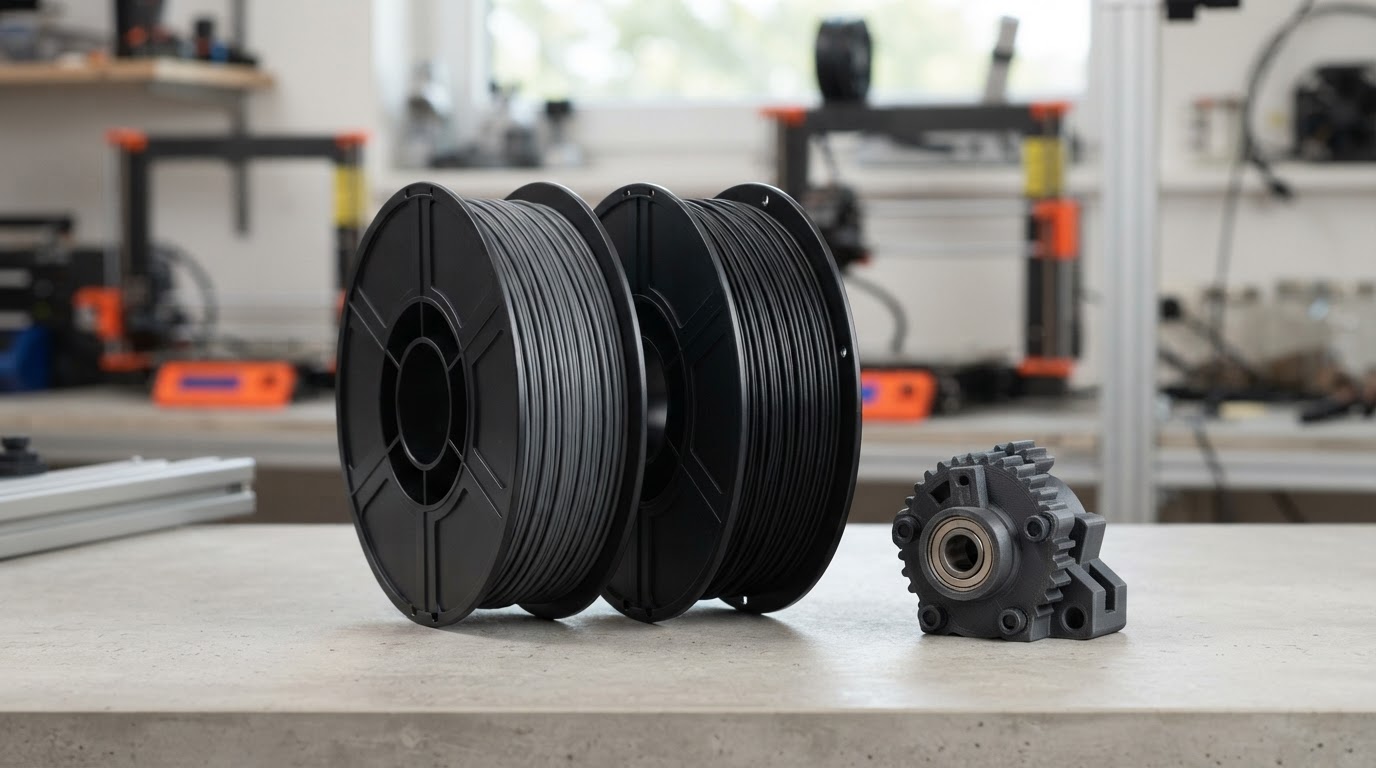
Quick compatibility overview
How each digital fabrication technology relates to abs & asa at a glance. See the sections below for detail.
- Diode LaserNot recommended — Technically possible in some cases but generally a poor or unsafe choice.
- CO2 LaserNot recommended — Technically possible in some cases but generally a poor or unsafe choice.
- Fiber LaserNot applicable — Not a meaningful combination for this material and technology.
- CNC RouterLimited — Possible but with significant constraints; often not the best choice.
- FDM 3D PrintingExcellent — A strong, well-suited match for this material.
- Resin 3D PrintingNot applicable — Not a meaningful combination for this material and technology.
Compatibility by technology
What each process can do with abs & asa, important limitations, and safety considerations.
Diode Laser
Not recommended — Technically possible in some cases but generally a poor or unsafe choice.ABS and ASA are not laser-friendly plastics. Heating them with a laser can release styrene and other fumes, melt the material, and produce a poor result. They are not a practical diode-laser cutting or engraving material.
Suited to
Limitations
- Heating ABS/ASA can release styrene and other fumes
- Melts and deforms rather than engraving cleanly
- Not a practical laser material
Safety considerations
- Do not laser-process ABS/ASA — heating can release styrene and other hazardous fumes.
- Confirm a plastic's identity before laser processing; unknown plastics can be hazardous.
Compatibility of Diode Laser with ABS & ASA.
CO2 Laser
Not recommended — Technically possible in some cases but generally a poor or unsafe choice.CO2 lasers are not recommended for ABS or ASA. The material melts, chars, and can release styrene and other fumes rather than cutting cleanly. These are not core CO2 materials and the fume hazard is a real concern.
Suited to
Limitations
- Melts and chars rather than cutting cleanly
- Can release styrene and other fumes when heated
- Not a recommended CO2 laser material
Safety considerations
- Ventilation does not make ABS/ASA laser-safe — heating can release styrene and hazardous fumes.
- Do not laser-process ABS/ASA without confirming the fume hazards.
Compatibility of CO2 Laser with ABS & ASA.
Fiber Laser
Not applicable — Not a meaningful combination for this material and technology.Fiber lasers are designed for metal and are not a practical process for ABS or ASA. The wavelength and power profile are not suited to these plastics.
Suited to
Limitations
- Fiber lasers are not an ABS/ASA processing tool
- Using the wrong laser type can melt or burn the material
Compatibility of Fiber Laser with ABS & ASA.
CNC Router
Limited — Possible but with significant constraints; often not the best choice.Finished ABS or ASA parts can be machined, but heat buildup can smear or melt the cut. It is possible with sharp tooling and conservative feeds/speeds, but these are not natural CNC machining materials, and the result depends on managing heat.
Operations
- Machining
Suited to
- Light post-machining of finished ABS/ASA parts where heat is controlled
Limitations
- Heat buildup can smear or melt the cut edge
- Requires sharp tooling and conservative feeds/speeds
- Not a primary CNC machining material
Safety considerations
- Manage heat and chips — melting plastic can foul tooling.
Compatibility of CNC Router with ABS & ASA.
FDM 3D Printing
Excellent — A strong, well-suited match for this material.ABS and ASA are well-established FDM filaments for tough, heat-resistant functional parts. ASA adds UV and weather resistance and emits substantially less styrene than ABS. Both print well but require a heated chamber/enclosure and good ventilation due to styrene and ultrafine particle emissions.
Operations
- Printing
Suited to
- Functional, durable, heat-resistant parts
- ASA for outdoor or UV-exposed applications
- Parts needing more toughness and temperature resistance than PLA
Limitations
- Requires a heated bed and ideally an enclosed/chambered printer
- Warping and adhesion challenges without proper setup
- ASA emits less styrene than ABS but both require ventilation
Safety considerations
- ABS printing releases styrene (classified by IARC as probably carcinogenic to humans, Group 2A) and ultrafine particles — use ventilation and an enclosure; do not rely on normal room ventilation alone.
- ASA emits substantially less styrene than ABS but still requires ventilation.
Compatibility of FDM 3D Printing with ABS & ASA.
Resin 3D Printing
Not applicable — Not a meaningful combination for this material and technology.Resin printers cure photopolymer resin and do not use ABS or ASA filament. 'ABS-like resin' is marketing terminology for a resin with ABS-like properties, not ABS filament being resin-printed.
Suited to
Limitations
- Resin printing does not use ABS/ASA filament
- ABS-like resin is a different material, not ABS
Compatibility of Resin 3D Printing with ABS & ASA.
Material safety notes
- ABS printing releases styrene (IARC Group 2A, probably carcinogenic to humans) and ultrafine particles — ventilate and enclose; do not assume normal room ventilation is sufficient.
- ASA emits substantially less styrene than ABS but still requires ventilation.
- Do not laser-process ABS/ASA — heating can release styrene and other hazardous fumes.
Notes & context
- ABS and ASA are related but not identical: ASA adds UV/weather resistance and emits substantially less styrene than ABS, so they are not interchangeable for outdoor or ventilation-sensitive use.
- ABS-like resin is a marketing category, not ABS filament — resin printing does not use ABS/ASA filament.
Related guides
Related materials
Sources & further reading
Selected references used to establish the compatibility guidance above. Always confirm against current manufacturer and material documentation before processing.
- Emission Profiles of Volatiles during 3D Printing with ABS, ASA, Nylon, and PETG Polymer Filaments — PMC / NCBI (Molecules)Styrene is the main VOC from ABS (IARC Group 2A); ASA emits roughly a quarter the styrene of ABS; emission profiles for ABS/ASA/PETG.
- 3D Printing Research at EPA — US EPAFDM printing emits ultrafine particles and VOCs deep into the respiratory system; ventilation.