Material compatibility reference
Hardwood Fabrication Compatibility
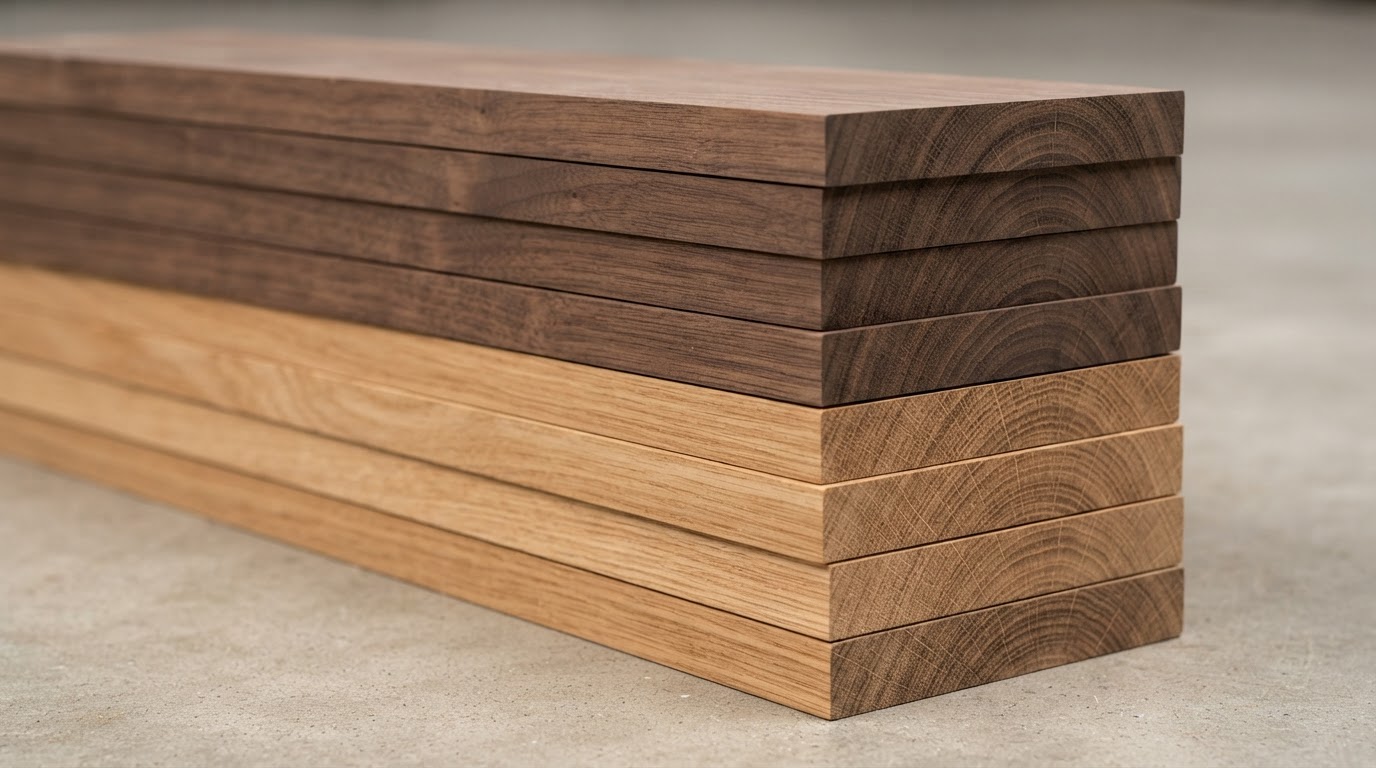
A broad category of dense wood from broadleaf trees — oak, maple, walnut, cherry and many others. Hardwood is a strong CNC and laser material, but species vary enormously in density, resin content, grain and charring behavior, so no single setting applies to all hardwoods.
Quick compatibility overview
How each digital fabrication technology relates to hardwood at a glance. See the sections below for detail.
- Diode LaserGood — A capable match with normal considerations.
- CO2 LaserExcellent — A strong, well-suited match for this material.
- Fiber LaserNot applicable — Not a meaningful combination for this material and technology.
- CNC RouterExcellent — A strong, well-suited match for this material.
- FDM 3D PrintingNot applicable — Not a meaningful combination for this material and technology.
- Resin 3D PrintingNot applicable — Not a meaningful combination for this material and technology.
Compatibility by technology
What each process can do with hardwood, important limitations, and safety considerations.
Diode Laser
Good — A capable match with normal considerations.Diode lasers engrave hardwood well and can cut thin stock, making them popular for signs and decoration. Results vary by species, density and resin content — denser, oilier woods char differently and may need different settings.
Operations
- Engraving
- Cutting
Suited to
- Engraving hardwood surfaces for signs and decoration
- Cutting thin hardwood for ornaments and inlay
Limitations
- Cutting thickness is limited by power and wood density
- Dense species engrave and char differently from lighter ones
- Resin/oil content affects charring and fumes
Safety considerations
- Ventilation is required — hardwood and its resins produce smoke and fumes.
- A laser is an ignition source; never run unattended and follow fire-safe practices.
Compatibility of Diode Laser with Hardwood.
CO2 Laser
Excellent — A strong, well-suited match for this material.CO2 lasers cut and engrave hardwood cleanly and handle thicker stock than typical diodes. A strong match for flat hardwood projects, signs, and detailed 2D work, though species still affects results.
Operations
- Cutting
- Engraving
Suited to
- Clean cutting of hardwood sheet and board, including thicker stock
- Detailed engraving and intricate 2D shapes
Limitations
- Dense, oily species char and cut differently from lighter ones
- Grain and moisture can affect engraving consistency
- Ventilation is required
Safety considerations
- Ventilation/exhaust is required for hardwood cutting.
- Never run unattended; a laser is an ignition source.
Compatibility of CO2 Laser with Hardwood.
Fiber Laser
Not applicable — Not a meaningful combination for this material and technology.Fiber lasers are designed for metal and are not a practical process for hardwood. The wavelength and power profile are not suited to wood.
Suited to
Limitations
- Fiber lasers are not a wood cutting or engraving tool
- Using the wrong laser type can burn or damage the material
Compatibility of Fiber Laser with Hardwood.
CNC Router
Excellent — A strong, well-suited match for this material.CNC routers are a strong match for hardwood — profiling, pocketing, joinery, carving, and dimensional work. Hardwood is a normal CNC machining application, though tooling, grain, workholding and feeds/speeds must suit the species.
Operations
- Machining
Suited to
- Profiles, pockets, and joinery in solid hardwood
- Furniture components, signs, and relief carving
- Dimensional work that a laser cannot do
Limitations
- Hard, dense species require appropriate tooling and conservative feeds/speeds
- Grain direction and tear-out matter — climb/conventional strategy and sharp tooling help
- Tool diameter limits inside-corner geometry
Safety considerations
- Hardwood dust is a respiratory hazard — use dust collection.
- Secure the workpiece firmly; cutting forces are real.
Compatibility of CNC Router with Hardwood.
FDM 3D Printing
Not applicable — Not a meaningful combination for this material and technology.FDM printers do not print solid hardwood. Wood-filled filament exists, but it is a composite printing material — plastic with wood fiber — and is not equivalent to machining solid lumber.
Suited to
Limitations
- FDM does not produce solid hardwood parts
- Wood-filled filament is a composite, not hardwood
Compatibility of FDM 3D Printing with Hardwood.
Resin 3D Printing
Not applicable — Not a meaningful combination for this material and technology.Resin printers cure photopolymer and do not produce hardwood. Wood-like resins are not solid wood.
Suited to
Limitations
- Resin printing does not produce hardwood parts
Compatibility of Resin 3D Printing with Hardwood.
Material safety notes
- Hardwood dust is a respiratory hazard — use dust collection for CNC work.
- Hardwood and its resins produce smoke and fumes when laser-cut — ventilation is required.
Notes & context
- "Hardwood" is not one uniform material — species differ in density, grain, resin content, and charring behavior, so settings and results vary.
- Hardwood is a clear overlap material: lasers excel at flat cutting and engraving; CNC excels at depth, pockets, joinery, and carving.
Related guides
Related materials
Sources & further reading
Selected references used to establish the compatibility guidance above. Always confirm against current manufacturer and material documentation before processing.
- Which Materials Are Not Suitable for Laser Cutting and Engraving? — Thunder Laser USALaser wood processing behavior and material-suitability framing.