Material compatibility reference
MDF Fabrication Compatibility
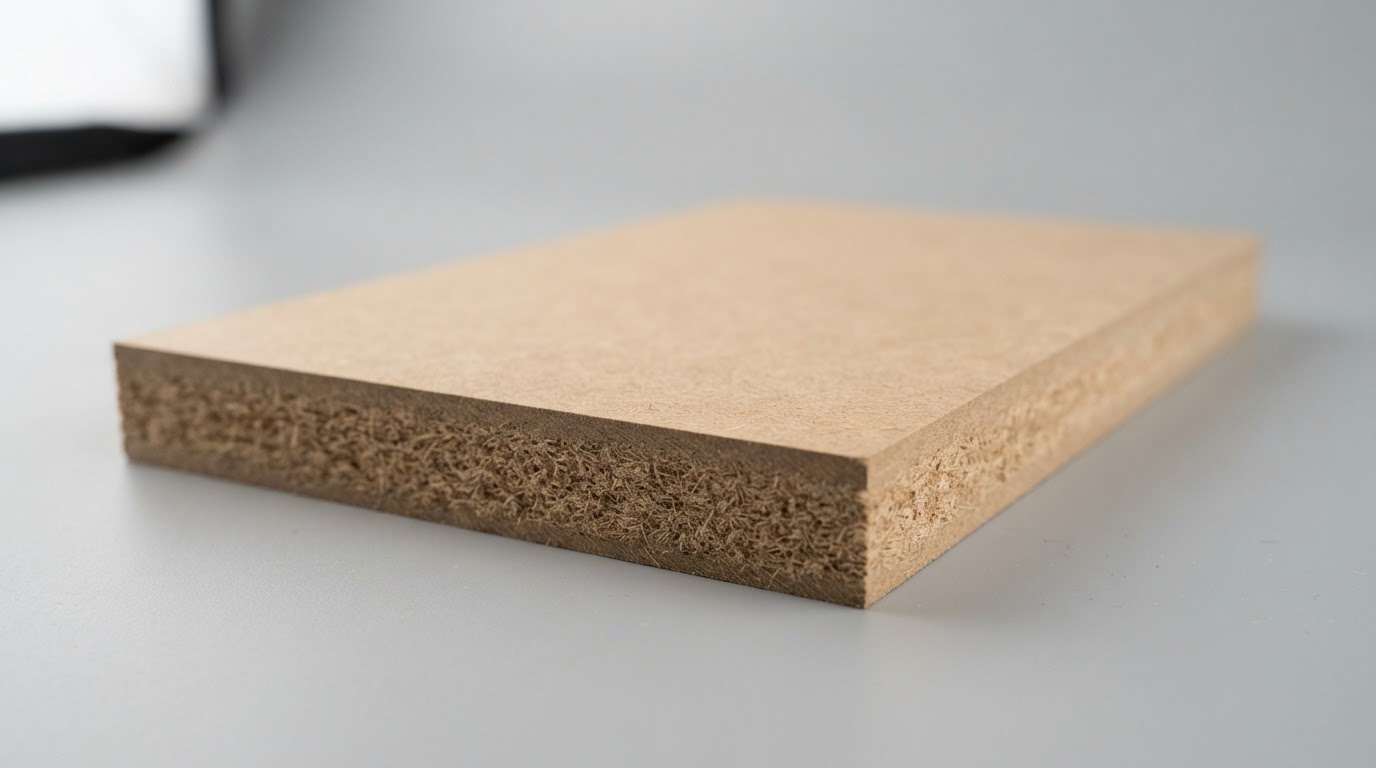
Medium-density fiberboard — an engineered wood panel made of fine wood fibers bonded with resin adhesive. MDF cuts and machines cleanly, but its binder content (often formaldehyde-based) makes ventilation and dust collection especially important, and it is not equivalent to natural solid wood.
Quick compatibility overview
How each digital fabrication technology relates to mdf at a glance. See the sections below for detail.
- Diode LaserConditional — Works, but depends heavily on machine, settings, or material specifics.
- CO2 LaserGood — A capable match with normal considerations.
- Fiber LaserNot applicable — Not a meaningful combination for this material and technology.
- CNC RouterExcellent — A strong, well-suited match for this material.
- FDM 3D PrintingNot applicable — Not a meaningful combination for this material and technology.
- Resin 3D PrintingNot applicable — Not a meaningful combination for this material and technology.
Compatibility by technology
What each process can do with mdf, important limitations, and safety considerations.
Diode Laser
Conditional — Works, but depends heavily on machine, settings, or material specifics.Diode lasers can engrave and cut thin MDF, but the adhesive binder produces more smoke and fumes than natural wood, and 'laser grade' MDF is not the same as standard MDF. Ventilation is essential.
Operations
- Cutting
- Engraving
Suited to
- Engraving MDF surfaces
- Cutting thin MDF for flat projects
Limitations
- Binder content produces smoke and fumes — ventilation is essential
- Cutting thickness is limited by power
- Standard MDF and 'laser grade' MDF differ in binder composition
Safety considerations
- MDF binders can release formaldehyde and other fumes when laser-cut — use adequate ventilation and do not assume 'laser grade' means fume-free.
- A laser is an ignition source; never run unattended.
Compatibility of Diode Laser with MDF.
CO2 Laser
Good — A capable match with normal considerations.CO2 lasers cut and engrave MDF well and handle thicker stock than typical diodes. MDF's uniform density gives consistent cuts, but its binder content means ventilation is especially important.
Operations
- Cutting
- Engraving
Suited to
- Clean, consistent cutting of MDF sheet
- Detailed engraving on a uniform surface
Limitations
- Binder content produces smoke and fumes — ventilation is essential
- Edges may char; 'laser grade' MDF behaves better but is not fume-free
Safety considerations
- MDF cutting can release formaldehyde-containing fumes — use proper ventilation/exhaust.
- Never run unattended; a laser is an ignition source.
Compatibility of CO2 Laser with MDF.
Fiber Laser
Not applicable — Not a meaningful combination for this material and technology.Fiber lasers are designed for metal and are not a practical process for MDF. The wavelength and power profile are not suited to engineered wood.
Suited to
Limitations
- Fiber lasers are not an MDF cutting or engraving tool
- Using the wrong laser type can burn or damage the material
Compatibility of Fiber Laser with MDF.
CNC Router
Excellent — A strong, well-suited match for this material.CNC routers are a strong match for MDF — its uniform density machines cleanly for profiles, pockets, and sheet work. Dust collection is especially important because MDF dust is fine and its binder content is a respiratory concern.
Operations
- Machining
Suited to
- Profiles and pockets in MDF sheet
- Signs, templates, jigs, and flat components
- Consistent machining across a uniform panel
Limitations
- Fine MDF dust is a respiratory hazard — dust collection is essential
- Edges can fuzz or tear if tooling/feeds are wrong
- MDF does not hold threads or fine detail the way solid wood does
Safety considerations
- MDF dust is fine and its binder content is a respiratory concern — use dust collection and appropriate PPE.
- Secure the workpiece firmly; MDF is dense and cutting forces are real.
Compatibility of CNC Router with MDF.
FDM 3D Printing
Not applicable — Not a meaningful combination for this material and technology.FDM printers do not print MDF. There is no MDF feedstock; wood-filled filament is a composite plastic and is not equivalent to MDF.
Suited to
Limitations
- FDM does not produce MDF parts
- Wood-filled filament is a composite, not MDF
Compatibility of FDM 3D Printing with MDF.
Resin 3D Printing
Not applicable — Not a meaningful combination for this material and technology.Resin printers cure photopolymer and do not produce MDF.
Suited to
Limitations
- Resin printing does not produce MDF parts
Compatibility of Resin 3D Printing with MDF.
Material safety notes
- MDF dust is fine and its binder content (often formaldehyde-based) is a respiratory hazard — use dust collection and PPE.
- Laser-cutting MDF can release formaldehyde and other fumes — ventilation is essential; 'laser grade' MDF is not fume-free.
Notes & context
- MDF is an engineered wood product, not natural solid wood — its binder content requires its own safety considerations for both laser and CNC work.
- Avoid universal claims about exact binder chemistry — composition varies by product and manufacturer; check the material documentation.
Related guides
Related materials
Sources & further reading
Selected references used to establish the compatibility guidance above. Always confirm against current manufacturer and material documentation before processing.
- Health & Safety: Proper Ventilation For Laser Cutting MDF — HF LaserMDF formaldehyde binder fumes and ventilation requirements.
- Which Materials Are Not Suitable for Laser Cutting and Engraving? — Thunder Laser USAMaterial suitability and fume/deposition hazards.