Material compatibility reference
Plywood Fabrication Compatibility
An engineered wood sheet made of glued veneer layers. Plywood is a material where lasers and CNC routers overlap heavily, but each process suits different operations and produces different results.
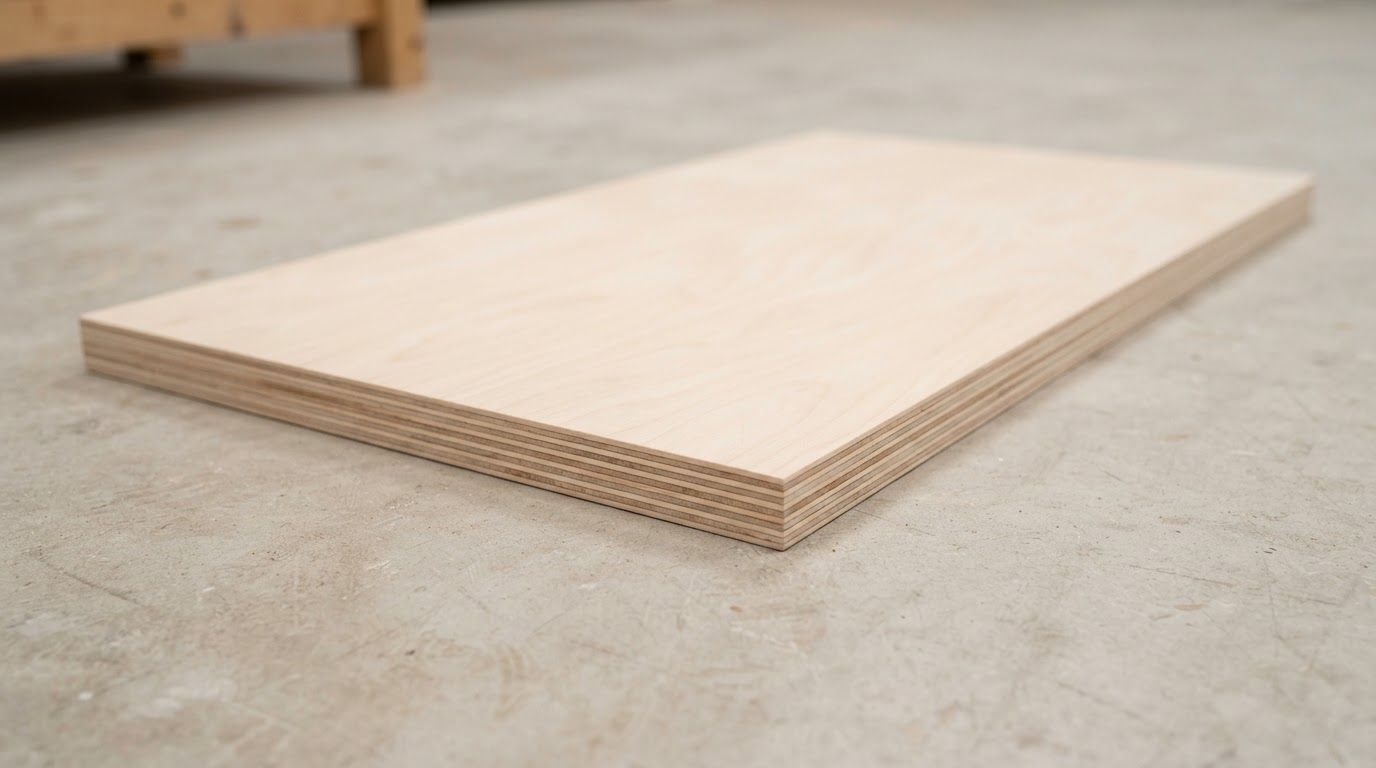
Quick compatibility overview
How each digital fabrication technology relates to plywood at a glance. See the sections below for detail.
- Diode LaserGood — A capable match with normal considerations.
- CO2 LaserExcellent — A strong, well-suited match for this material.
- Fiber LaserNot applicable — Not a meaningful combination for this material and technology.
- CNC RouterExcellent — A strong, well-suited match for this material.
- FDM 3D PrintingNot applicable — Not a meaningful combination for this material and technology.
- Resin 3D PrintingNot applicable — Not a meaningful combination for this material and technology.
Compatibility by technology
What each process can do with plywood, important limitations, and safety considerations.
Diode Laser
Good — A capable match with normal considerations.Diode lasers engrave and cut thin plywood well, making them a popular desktop choice for ornaments, signs, and flat projects. Capability depends on power and material thickness.
Operations
- Cutting
- Engraving
Suited to
- Engraving plywood surfaces for signs and decoration
- Cutting thin plywood for ornaments and flat projects
Limitations
- Cutting thickness is limited by power
- Adhesive in the veneer layers can char and produce fumes
- Air assist and ventilation are required
Safety considerations
- Ventilation is required — plywood and its adhesives produce smoke and fumes.
- A laser is an ignition source; never run unattended and follow fire-safe practices.
Compatibility of Diode Laser with Plywood.
CO2 Laser
Excellent — A strong, well-suited match for this material.CO2 lasers cut and engrave plywood cleanly and are well suited to thicker sheet than most diodes. A strong match for flat wood projects, signs, and intricate 2D work.
Operations
- Cutting
- Engraving
Suited to
- Clean cutting of plywood sheet, including thicker stock than typical diodes
- Detailed engraving and intricate 2D shapes
Limitations
- Adhesive content can char edges and produce fumes
- Ventilation is required
Safety considerations
- Ventilation/exhaust is required for plywood cutting.
- Never run unattended; a laser is an ignition source.
Compatibility of CO2 Laser with Plywood.
Fiber Laser
Not applicable — Not a meaningful combination for this material and technology.Fiber lasers are designed for metal and are not a practical process for plywood. The wavelength and power profile are not suited to wood sheet.
Suited to
Limitations
- Fiber lasers are not a wood cutting or engraving tool
- Using the wrong laser type can burn or damage the material
Compatibility of Fiber Laser with Plywood.
CNC Router
Excellent — A strong, well-suited match for this material.CNC routers are a strong match for plywood — profiling, pocketing, joinery, and dimensional work that a laser cannot do. Where depth, pockets, or joinery matter, CNC is often the better choice.
Operations
- Machining
Suited to
- Profiles, pockets, and joinery in plywood
- Furniture components, cabinet parts, and jigs
- Dimensional work and carving that a laser cannot do
Limitations
- Tool diameter limits inside-corner geometry
- Workholding and tabs are needed to secure sheet
- Dust collection is required
Safety considerations
- Plywood dust is a respiratory and cleanup hazard — use dust collection.
- Secure the workpiece firmly; cutting forces can shift sheet stock.
Compatibility of CNC Router with Plywood.
FDM 3D Printing
Not applicable — Not a meaningful combination for this material and technology.FDM printers do not print plywood. Wood-filled filament exists, but it is a composite printing material and is not equivalent to machining plywood sheet.
Suited to
Limitations
- FDM does not produce plywood parts
- Wood-filled filament is a composite, not plywood
Compatibility of FDM 3D Printing with Plywood.
Resin 3D Printing
Not applicable — Not a meaningful combination for this material and technology.Resin printers cure photopolymer and do not produce plywood. Wood-like resins exist but are not plywood.
Suited to
Limitations
- Resin printing does not produce plywood parts
Compatibility of Resin 3D Printing with Plywood.
Material safety notes
- Plywood dust is a respiratory hazard — use dust collection for CNC work.
- Plywood and its adhesives produce smoke and fumes when laser-cut — ventilation is required.
Notes & context
- Plywood is a clear overlap material: lasers excel at flat cutting and engraving; CNC excels at depth, pockets, and joinery. The operation decides the process.
- Adhesive content varies by plywood grade and affects both laser charring and machining behavior.